


- Home
- About Us
- DNA Tests
Peace of Mind
- Paternity DNA Test
- Maternity DNA Test
- Trio Paternity DNA Test
- Sibling ship DNA Test
- Avuncular DNA Test – Uncle/Aunt & Niece/Nephew
- Grand parentage DNA Test
- mtDNA Test – Maternal Lineage
- Y-STR DNA Test – Paternal Lineage
- Child’s Swap DNA Test
- Child Adoption DNA Test
- IVF DNA Test
- DNA Profiling Test – Single-Person DNA Profiling
- Human Identification DNA Test
- Forensic Sample-Based DNA Testing
- Non-Invasive Prenatal Paternity Test – Safe & Accurate During Pregnancy
- Cell Line Authentication DNA Test
Legal DNA Test
- Legal Paternity DNA Test- Court Admissible
- Legal Maternity DNA Test- Court Admissible
- Court Approved Trio Paternity DNA Test- Father, Mother & Child
- Siblingship DNA Test – Legal cases
- Legal Grand Parentage DNA Test
- Legal Avuncular DNA Test – Uncle/Aunt & Niece/Nephew
- Legal mtDNA Test – Maternal Lineage
- Legal Y-STR DNA Test – Paternal Lineage
- Organ & Kidney Transplant DNA Test – Court Certified
- DNA Profiling Test – Court Approved Legal Documentation
- Immigration DNA Test – Legal Purpose
- Legal Child Swap DNA Test
- Legal IVF Confirmation DNA Test
- Legal Adoption DNA Test
- Forensic Services
- Forensic Kits
- Our Centre
- Blog
- Training / Internship
- Contacts
TRIO Paternity DNA Test
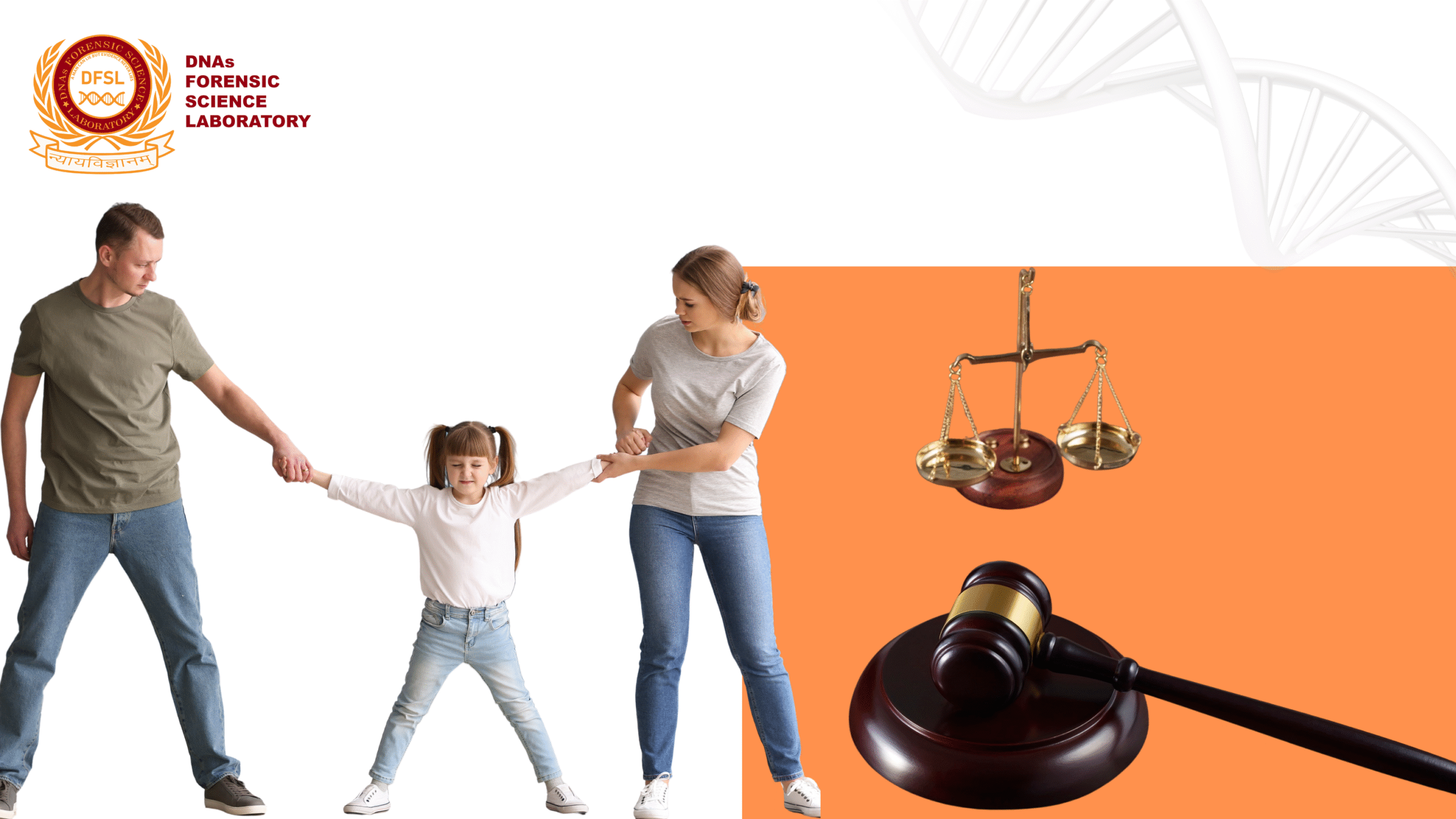
What is a Legal TRIO Paternity DNA Test?
Most people know about a simple paternity DNA test, which compares the DNA of a child and an alleged father. But sometimes, the test includes the mother’s DNA as well — this is called a Trio Paternity DNA Test.
In this test, the DNA of three people is analyzed:
- The child
- The alleged father
- The biological mother
Including the mother’s DNA makes the results more accurate and conclusive, especially in complex cases.When done under court supervision with legal protocols, it becomes a Court-Approved Trio Paternity DNA Test, which means it is legally valid and admissible in Indian courts.
Why Would Courts Order a Trio Paternity DNA Test?
There are several real-life situations where Indian courts may require this type of test:
- Child Custody & Divorce Cases– To prove or disprove fatherhood during disputes.
- Inheritance or Property Rights– To confirm a child’s biological father before dividing property.
- Immigration Purposes– To establish parent-child relationships when documents are missing.
- Doubts Over Parentage– If a man denies fatherhood, the mother’s DNA helps strengthen the test.
- Surrogacy or IVF Issues– When parentage is questioned, the trio test brings clarity.
How Does a Court-Approved Trio DNA Test Work?
- Court Permission
- The test is conducted only after the court orders it, especially in legal disputes.
- Sample Collection (Chain of Custody)
- DNA samples (usually cheek swabs) are collected from the child, alleged father, and mother.
- The process is supervised with ID verification, photographs, and signatures.
- Lab Analysis
- A certified lab compares multiple genetic markers of the three samples.
- The presence of the mother’s DNA makes exclusion or confirmation of paternity more precise.
- Report Submission
- The final report is sealed and sent directly to the court.
- Unlike private tests, the parties don’t receive the report directly.
Example of a Real-Life Incident in India
In a property dispute case in Uttar Pradesh, a man claimed he was not the father of a child who sought a share in his ancestral property. The mother insisted he was the biological father. To resolve the matter, the court ordered a Trio Paternity DNA Test.
The test compared the DNA of the mother, child, and alleged father. Results confirmed that the man was indeed the biological father. This scientific evidence helped the court settle the inheritance issue fairly, ensuring the child’s rightful share.
Real-Life Impact of Court-Approved Trio Testing
- Family Disputes Resolved– Helps the court find the truth in custody and divorce battles.
- Children’s Rights Protected– Ensures rightful heirs in inheritance cases.
- Fraud Prevention– Stops false claims of fatherhood or property rights.
- Immigration Approvals– Proves biological ties for visas and international relocation.
- Emotional Closure– Gives families scientific clarity instead of endless arguments.
Case Example – Immigration Verification
In a Delhi immigration case, a child’s visa application was questioned because the documents were incomplete. The father lived abroad, and the authorities demanded proof. A Court-Approved Trio Paternity DNA Test was ordered. The mother’s DNA along with the father’s confirmed the child’s biological connection. This allowed the family to reunite abroad without further delays.
Why Courts Trust DNA Tests
Indian courts consider DNA testing one of the most trustworthy scientific methods to prove parentage. Judges rely on such results when documents, witness statements, or traditional evidence are insufficient. In trio testing, the presence of the mother’s DNA makes the results even stronger in the eyes of law.
From custody disputes and property rights to immigration and surrogacy, trio testing ensures that the court has clear, unbiased, and scientifically accurate evidence.
In a country like India, where family, inheritance, and legal disputes are deeply emotional, this test plays a crucial role in protecting children’s futures and ensuring fairness.
Talk to Experts
