


- Home
- About Us
- DNA Tests
Peace of Mind
- Paternity DNA Test
- Maternity DNA Test
- Trio Paternity DNA Test
- Sibling ship DNA Test
- Avuncular DNA Test – Uncle/Aunt & Niece/Nephew
- Grand parentage DNA Test
- mtDNA Test – Maternal Lineage
- Y-STR DNA Test – Paternal Lineage
- Child’s Swap DNA Test
- Child Adoption DNA Test
- IVF DNA Test
- DNA Profiling Test – Single-Person DNA Profiling
- Human Identification DNA Test
- Forensic Sample-Based DNA Testing
- Non-Invasive Prenatal Paternity Test – Safe & Accurate During Pregnancy
- Cell Line Authentication DNA Test
Legal DNA Test
- Legal Paternity DNA Test- Court Admissible
- Legal Maternity DNA Test- Court Admissible
- Court Approved Trio Paternity DNA Test- Father, Mother & Child
- Siblingship DNA Test – Legal cases
- Legal Grand Parentage DNA Test
- Legal Avuncular DNA Test – Uncle/Aunt & Niece/Nephew
- Legal mtDNA Test – Maternal Lineage
- Legal Y-STR DNA Test – Paternal Lineage
- Organ & Kidney Transplant DNA Test – Court Certified
- DNA Profiling Test – Court Approved Legal Documentation
- Immigration DNA Test – Legal Purpose
- Legal Child Swap DNA Test
- Legal IVF Confirmation DNA Test
- Legal Adoption DNA Test
- Forensic Services
- Forensic Kits
- Our Centre
- Blog
- Contacts
Legal GRAND PARANTAGE DNA Test
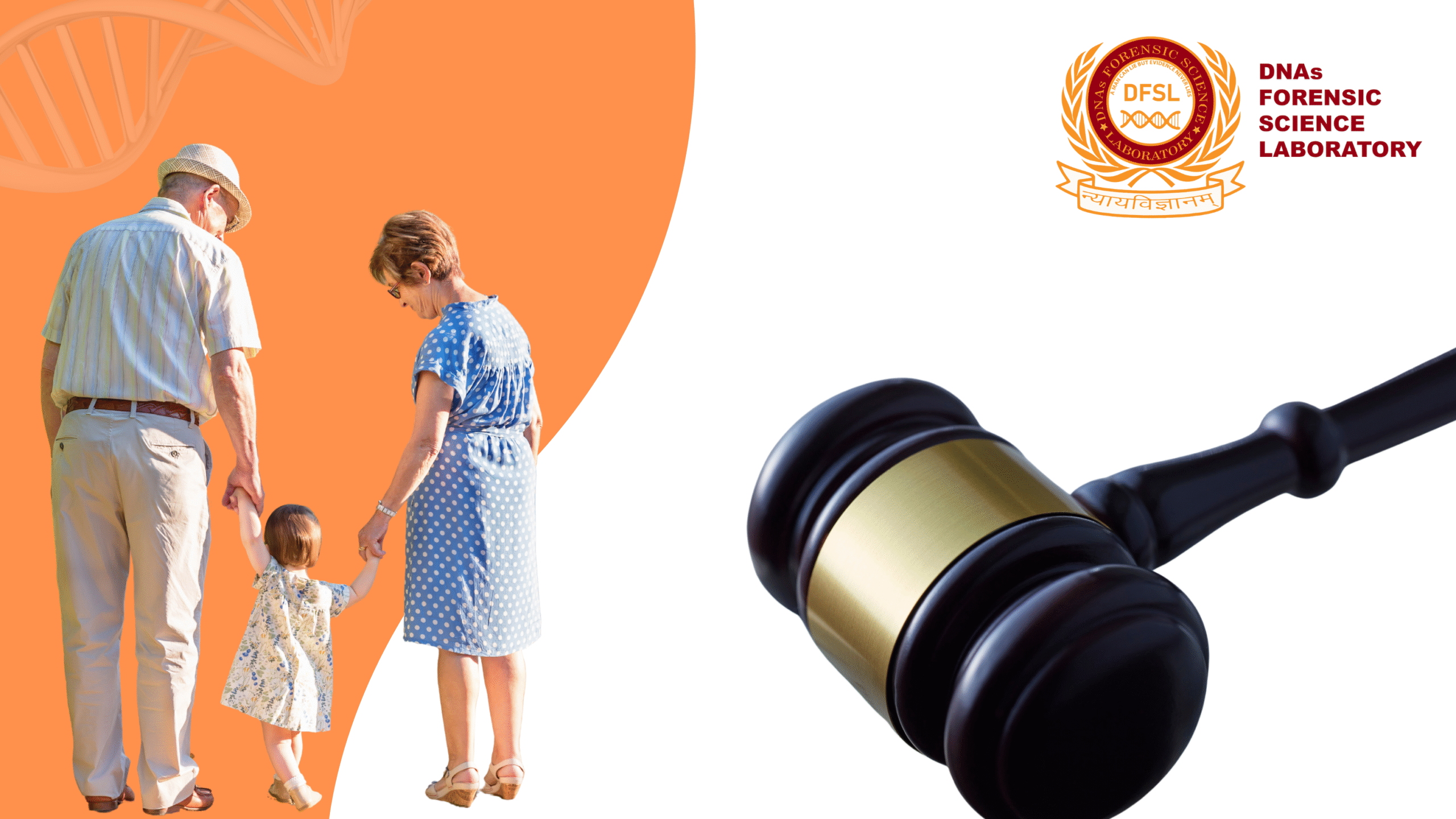
What is a Legal GRAND PARANTAGE DNA Test?
Sometimes, the parents are not available for DNA testing — maybe due to death, separation, or other reasons. In such cases, the grandparents’ DNA can be tested to find out if a child is biologically related to a particular family.
A Legal Grandparent age DNA Test compares the DNA of a child with the alleged grandparents to check whether they share a biological connection. When done under proper legal procedures, this test is court-recognized and can be used in inheritance, custody, and immigration cases.
When Do Courts Order Grand parentage DNA Tests?
Courts in India may ask for this test in situations such as:
- Inheritance & Property Disputes
- If the parents are not alive, the court may order testing to confirm if the child is the true grandchild and therefore entitled to property rights.
- Custody & Guardianship Cases
- Grandparents often fight for custody of grandchildren after divorce, death, or abandonment of parents. A DNA test strengthens their claim.
- Immigration Verification
- When parents are unavailable, grandparents can prove family ties for visas and international relocation.
- Paternity or Maternity Uncertainty
- If the father or mother is missing or refuses testing, the grandparents’ DNA helps confirm parentage indirectly.
How Does a Court-Recognized Grand parentage Test Work?
- Court Permission
- A judge orders the test when biological parentage needs to be established but parents are unavailable.
- Sample Collection
- DNA samples are collected from the child and one or both grandparents.
- A strict chain of custody process is followed with ID verification, photographs, and sealed samples.
- Laboratory Analysis
- The lab compares genetic markers of the grandparents with the child.
- If both grandparents are tested, the accuracy is very high. Even with one grandparent, reliable results can be achieved.
- Report Submission
- The final sealed report is sent directly to the court and is legally valid.
Real-Life Case in India
In a case in Madhya Pradesh, a young boy’s mother died, and the alleged father refused to acknowledge him. The boy’s maternal grandparents fought for his inheritance rights. Since the father refused paternity testing, the court ordered a Legal Grand parentage DNA Test with the father’s parents.
The test confirmed the boy was biologically related to the alleged grandparents. Based on this, the court ruled that the child was indeed the legal heir and deserved his rightful share of the father’s property.
This case shows how grandparentage DNA tests protect children’s rights even when parents are unavailable or unwilling to cooperate.
Why Grandparent DNA Testing is Important
- Protects Children’s Future
- Ensures rightful heirs are not denied inheritance.
- Supports Custody Battles
- Gives grandparents legal standing to care for grandchildren.
- Prevents Fraudulent Claims
- Stops unrelated individuals from falsely claiming to be heirs.
- Helps Immigration Cases
- Provides proof of family bonds when birth certificates or parents’ documents are missing.
- Brings Emotional Closure
- Offers scientific clarity in sensitive family disputes.
Example – Custody Battle After Parents’ Death
In a tragic accident in Delhi, both parents of a young child passed away. Two families claimed custody of the child. The court ordered a Legal Grand parentage DNA Test to confirm the true biological grandparents. Once the results confirmed the relationship, custody was given to the rightful family, protecting the child’s best interests.
Why Courts Trust It
Indian courts increasingly rely on DNA evidence because it is scientific, unbiased, and nearly conclusive. Grand parentage testing is especially valuable in cases where parents are absent but family rights need to be proven.
Quick Contact
