


- Home
- About Us
- DNA Tests
Peace of Mind
- Paternity DNA Test
- Maternity DNA Test
- Trio Paternity DNA Test
- Sibling ship DNA Test
- Avuncular DNA Test – Uncle/Aunt & Niece/Nephew
- Grand parentage DNA Test
- mtDNA Test – Maternal Lineage
- Y-STR DNA Test – Paternal Lineage
- Child’s Swap DNA Test
- Child Adoption DNA Test
- IVF DNA Test
- DNA Profiling Test – Single-Person DNA Profiling
- Human Identification DNA Test
- Forensic Sample-Based DNA Testing
- Non-Invasive Prenatal Paternity Test – Safe & Accurate During Pregnancy
- Cell Line Authentication DNA Test
Legal DNA Test
- Legal Paternity DNA Test- Court Admissible
- Legal Maternity DNA Test- Court Admissible
- Court Approved Trio Paternity DNA Test- Father, Mother & Child
- Siblingship DNA Test – Legal cases
- Legal Grand Parentage DNA Test
- Legal Avuncular DNA Test – Uncle/Aunt & Niece/Nephew
- Legal mtDNA Test – Maternal Lineage
- Legal Y-STR DNA Test – Paternal Lineage
- Organ & Kidney Transplant DNA Test – Court Certified
- DNA Profiling Test – Court Approved Legal Documentation
- Immigration DNA Test – Legal Purpose
- Legal Child Swap DNA Test
- Legal IVF Confirmation DNA Test
- Legal Adoption DNA Test
- Forensic Services
- Forensic Kits
- Our Centre
- Blog
- Contacts
Legal Paternity DNA Test
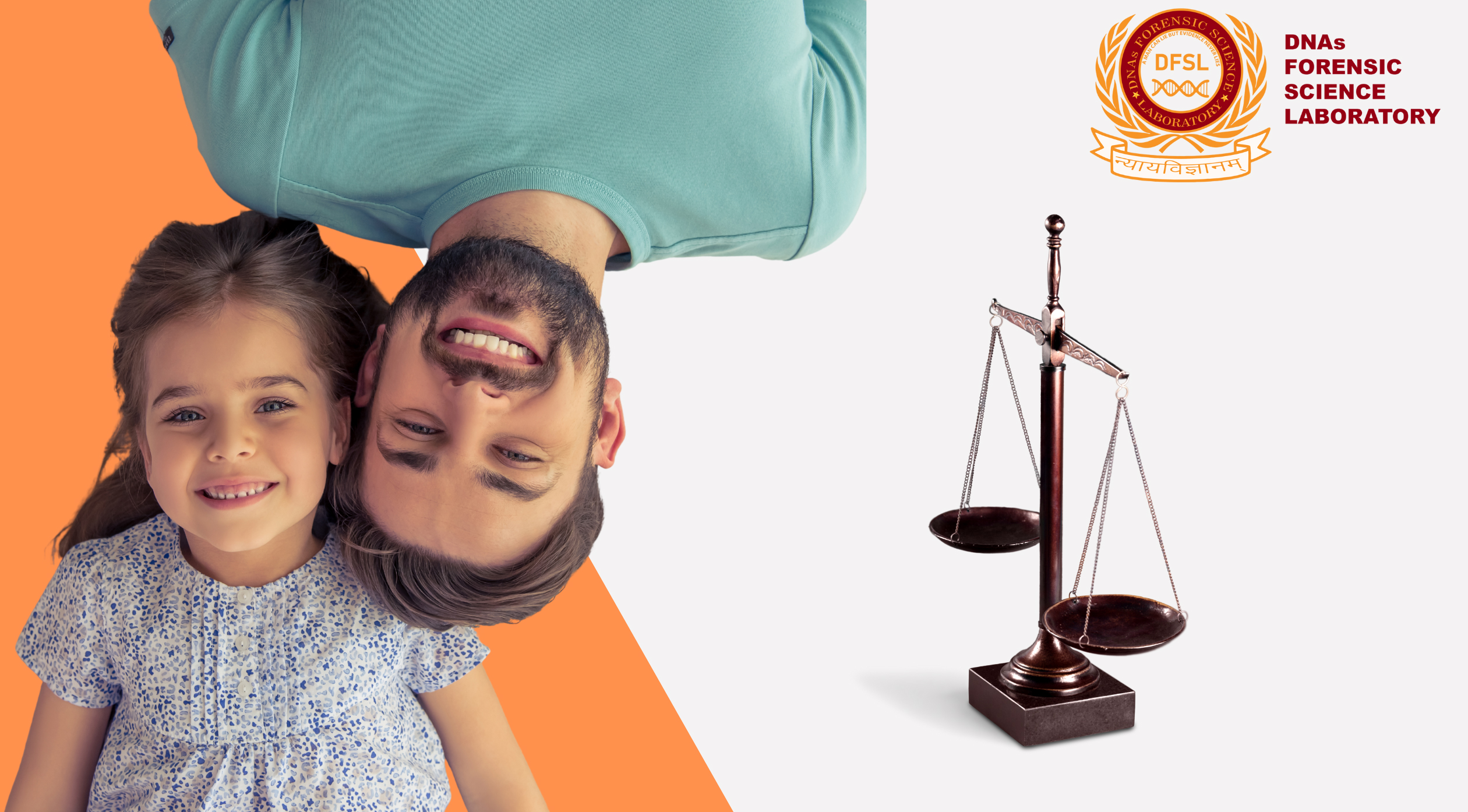
What is a Legal Paternity DNA Test?
A legal paternity DNA test is a scientific method used to prove whether a man is the biological father of a child, but with an important difference – it is conducted under strict rules so that the results can be used in court cases. Unlike home DNA kits, where samples are collected casually, a court-admissible paternity test follows a “chain of custody” process, ensuring that:
- Samples are collected in front of authorized professionals.
- Identity of each person is verified through ID proofs, photographs, and signatures.
- The lab conducting the test is certified and recognized by courts.
Legal paternity testing in India is commonly used in:
- Child Custody & Support Cases– To prove or disprove the father’s responsibility.
- Divorce Disputes– When questions about the child’s parentage arise.
- Property & Inheritance Cases– To decide who the rightful heir is.
- Criminal Investigations– Sometimes courts order DNA to settle sensitive matters.
- Immigration Purposes– To prove biological relationships when documents are not enough.
Process
- Court Approval
- A legal paternity test cannot be done secretly or without reason. The court must approve it when it is relevant to a case.
- Chain of Custody Sample Collection
- Samples are taken by a court-approved lab or authorized medical officer.
- Identity documents, photos, and signatures are recorded.
- DNA Testing in Lab
- The lab compares the DNA profiles of the child and alleged father.
- Results show a probability score:
- 99.99% or higher→ Biological father confirmed.
- 0%→ Not the biological father.
- Report Submission
- The sealed report is sent directly to the court to avoid tampering.
- Court Approval
Difference Between Peace of Mind Test vs. Legal Test
- Peace of Mind Test: Simple, done at home, only for personal knowledge. Not valid in court.
- Legal DNA Test: Done under strict rules, identity verified, report accepted in court.
Real-Life Impact
Imagine a man accused of being the father of a child outside his marriage. Without proof, he might have to pay lifelong maintenance or face social stigma. But if a court-ordered DNA test shows he is not the father, it saves his dignity, finances, and legal record.
On the other side, if the test proves paternity, it ensures the child gets rightful inheritance, maintenance, and identity. This balance makes DNA testing a tool of truth and justice.
A Legal Paternity DNA Test is not just a medical test; it’s a powerful legal tool. It helps courts uncover the truth in disputes where emotions, money, and dignity are at stake. While Indian courts are cautious and ensure privacy rights are not violated, they also recognize the importance of DNA science in delivering justice.
From family disputes to inheritance battles, legal paternity tests have played a crucial role in Indian courtrooms. As science and law work hand-in-hand, these tests bring clarity, fairness, and peace of mind to complicated relationships.
Quick Contact
